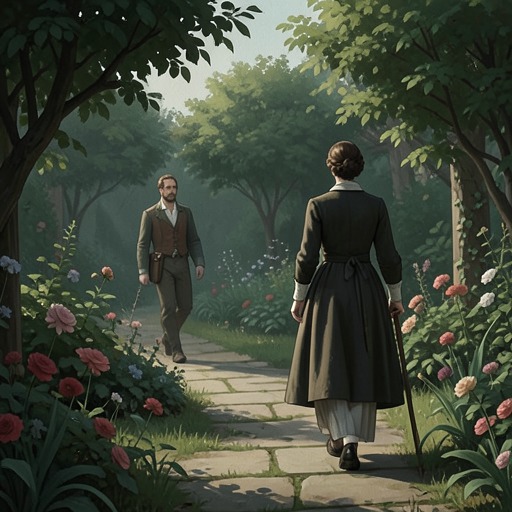
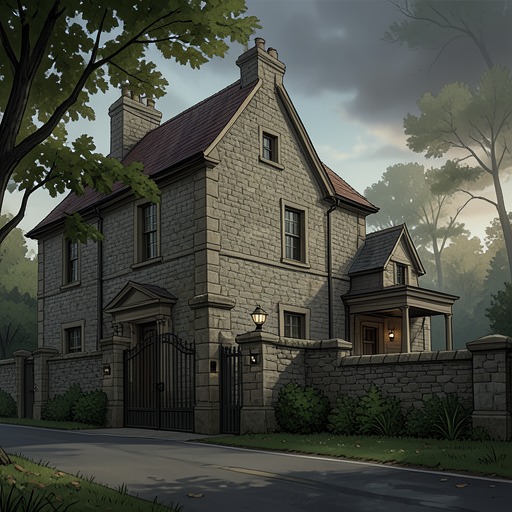
Woods surrounding the house
We Have Always Lived in the CastleThe Woods surrounding the house are both a physical approach to the Blackwood home and a refuge Mary Katherine Blackwood knows how to navigate in darkness. Their paths connect the house, its garden, and Mary Katherine’s concealed shelter; at moments of danger, that familiar geography lets her guide Constance Blackwood away from other people and later back toward home. The woods offer concealment rather than a lasting escape: the sisters can retreat beneath the trees, but the ruined house and its altered domestic world remain the destination they must face.
Setting and Spatial Geography
The woods are not presented as an undifferentiated wilderness. Paths run through them toward particular points around the property. One overgrown route leads to the Summerhouse, a place Mary Katherine has avoided for six years. The building itself is wet, dark, and neglected; trees crowd its sides and press over its roof. Its creek, planned waterfall, and plantings belong to an abandoned design, while its present condition makes it feel markedly different from the maintained home. The route through the woods thus joins the cultivated household to a place left to decay.
Other paths serve a more practical purpose. After the sisters have fled, Mary Katherine leads them through the darkness to her hiding place, where branches can be laid across the entrance. Later, she chooses a path that will bring them out of the woods behind the house, near the vegetable garden. These routes give the surrounding woodland a legible, intimate geography: Mary Katherine knows where a path leads, where to pause, and how to approach without exposing the group too soon.
Flight and Concealment
When Mary Katherine runs from the house, she first reaches the middle of a grassy field, where tall grass hides her from view. Jonas finds her there, and they sit where no one can see them. Afterward, she decides to go to the Summerhouse, a place she has not visited in six years. The sequence moves from the open field to the overgrown path and then into the disused building, each space more removed from ordinary household life than the last. Yet the Summerhouse does not become a comfortable refuge: inside, the floor is stone, the room is wet and dark, and the chairs and low table that once furnished it are gone.
After Julian Blackwood dies and people begin leaving the house, Mary Katherine draws Constance away from the departing visitors. She waits until the trees’ shadows fall over them, then hurries with Constance from the lawn onto the soft, mossy path. When the trees close around them, she stops and embraces her sister. The movement from a public gathering to the wooded path marks a decisive change in their immediate circumstances: the sisters are no longer among the visitors, and Mary Katherine can reassure Constance that the ordeal is over.
The Hiding Place and Its Uses
Mary Katherine has prepared the hiding place before leading Constance there. She is glad that she has straightened it and made it pleasant for her sister; inside, a fresh pile of leaves and a blanket provide a place to sit, and she covers Constance with Julian Blackwood’s shawl. Jonas is already waiting in a corner. Mary Katherine then lays branches across the entrance so that people carrying lights will not see them. The concealment is deliberate and domestic in its details: leaves, a blanket, a familiar cat, and the shawl turn a hidden space into temporary shelter for the sisters.
The hiding place also carries Mary Katherine’s imagined future. She thinks of covering Constance with leaves to keep her warm, bringing her fruit and water, and one day going with her to the moon. These thoughts make the woods more than a route away from danger: they are the setting in which Mary Katherine can picture herself caring for Constance beyond the reach of those outside. That vision remains bound to concealment, however. The branches must hide the entrance, and the sisters have retreated there because the gathering at the house has become intolerable.
Return After the Fire
The woods become a route back when Mary Katherine, Constance, and Jonas leave their concealment. Mary Katherine goes first, walking silently; she asks Constance to move carefully and holds her back at the edge of the woods so they can check whether anyone remains. The path brings them out near the vegetable garden and kitchen door. At first the garden and door look as they always have. Then Constance sees that the upper part of the house is gone.
From that wooded edge, the sisters approach the house slowly. The bedrooms and attic have burned, while the ground floor remains, but the surrounding domestic landscape is marked by smoke and ash: ash has settled among the vegetables, and even the grass and apple trees seem dirty. The woods have returned them to the place Mary Katherine knows, but not to the home as it was. In the kitchen, the intruders’ destruction is visible in broken dishes, scattered food, and damaged household possessions. Constance can still find food preserved in the cellar and pantry, and she begins to resume the work of feeding them; outside, the sisters can gather vegetables from the garden, though Mary Katherine dislikes eating them while they remain ash-stained.
Narrative Significance
The woods give Mary Katherine a kind of practical authority. She knows the paths, recognizes when to wait, and leads the others between exposed ground and hidden shelter. Their function changes with the story’s immediate needs: the overgrown path takes her to an abandoned place, the mossy route carries the sisters away from the gathering, and the path back leads them to the fire’s aftermath. In each instance, knowledge of the landscape helps Mary Katherine act when the house can no longer offer an uncomplicated sense of safety.
That protection is limited and sharply contrasted with the household spaces to which the paths return. The sisters can be hidden among trees, and Mary Katherine can block an entrance with branches, but the woods do not restore the damaged home or remove the ash from its garden. The landscape therefore holds both concealment and exposure: it shelters the sisters for a time, then brings them to the threshold of the altered house. Its familiar routes make retreat and return possible without making either one a resolution.